 Skip to content

Anyone who has scheduled air conditioning repair in Mesa has likely seen the term “EPA certified” on a technician’s paperwork or invoice. That certification is not a marketing label. It refers to a specific federal requirement that governs who may legally handle the refrigerant inside a home or business’s cooling system.
Understanding what this certification covers helps us explain, clearly and honestly, why the credential matters every time we send a technician to a job.
What Is EPA Section 608 Certification?
Section 608 of the Clean Air Act established the National Recycling and Emission Reduction Program, a federal framework that regulates how technicians handle refrigerants during HVAC service. Refrigerant is the chemical compound that absorbs and releases heat as it cycles through an air conditioning system, allowing the equipment to cool indoor air.
Under the Clean Air Act’s refrigerant program, it is illegal for anyone to intentionally release, or “vent,” ozone-depleting refrigerants and their substitutes into the atmosphere while servicing, repairing, or disposing of cooling equipment. To legally perform work that could release these substances, a technician must pass an EPA-approved exam administered by an accredited certifying organization.
This requirement applies to anyone who attaches gauges to a system, adds or removes refrigerant, or otherwise breaks into a sealed refrigeration circuit. Apprentices may perform this work only under the direct and continuous supervision of a certified technician.
The certification itself does not expire once earned, though the underlying regulations continue to evolve.
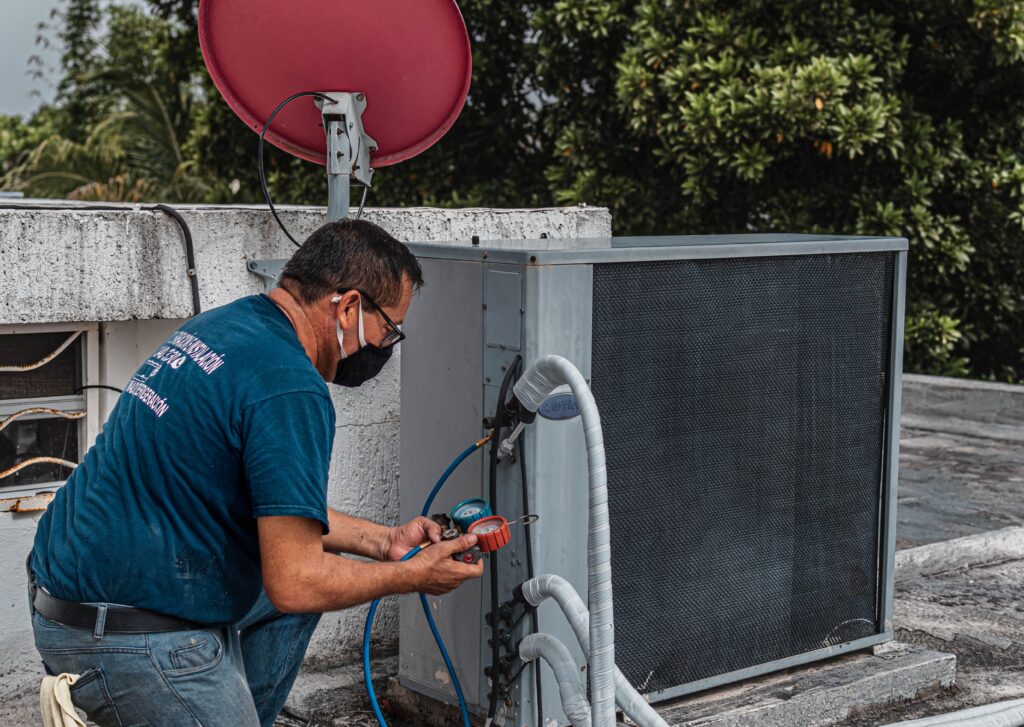
The Four Types of Section 608 Certification
The EPA structures certification around the type of equipment a technician services rather than issuing a single blanket credential. According to the technician certification requirements published by the agency, there are four distinct paths:
- Type I — for technicians servicing small appliances, such as household refrigerators and window units
- Type II — for servicing or disposing of high- and very high-pressure appliances, which includes most residential and commercial split-system air conditioners
- Type III — for servicing or disposing of low-pressure appliances, typically large chiller systems
- Universal — for technicians who work across all equipment categories, requiring a proctored core exam
A technician holding only a Type I credential, for example, is not legally authorized to service the rooftop or split-system condenser common in most Mesa homes. This is one reason we make sure every technician we send carries the certification level that actually matches the job, not just a general credential.
Why This Matters for Mesa Homeowners and Property Managers
Arizona’s climate places unusually heavy demand on refrigeration equipment, since cooling systems here often run for eight or more months out of the year. That extended run time means more service calls, more refrigerant handling, and more opportunities for improperly certified work to cause lasting damage.
A technician who lacks proper certification may mishandle refrigerant in ways that reduce system efficiency, void manufacturer warranties, or create safety hazards inside the home. There is also a broader environmental dimension tied directly to local air quality.
Many refrigerants used in air conditioning are hydrofluorocarbons, compounds regulated under the American Innovation and Manufacturing Act because of their potency as greenhouse gases. The EPA’s ongoing HFC phasedown program is gradually reducing the production and use of these substances nationwide, which means older systems in Mesa homes will increasingly rely on certified technicians who understand proper recovery and recycling procedures.
We’ve watched this shift firsthand as older refrigerant types become harder to source, making correct handling even more important during every repair.
Refrigerant Handling in a Desert Climate
Extended cooling seasons also increase the physical stress placed on refrigerant lines, seals, and compressors, raising the likelihood that a system will need refrigerant recovered or recharged at some point. Certified technicians are trained specifically in recovery equipment use, which captures refrigerant safely rather than releasing it during repairs.
Beyond the refrigerant itself, the equipment we install and service is also evaluated against separate efficiency benchmarks through the Department of Energy’s appliance standards program, and many components carry independent performance certification that gives us and our customers a verified baseline for how a system should perform. Property managers overseeing multiple units benefit from confirming both certifications before authorizing refrigerant-related work.
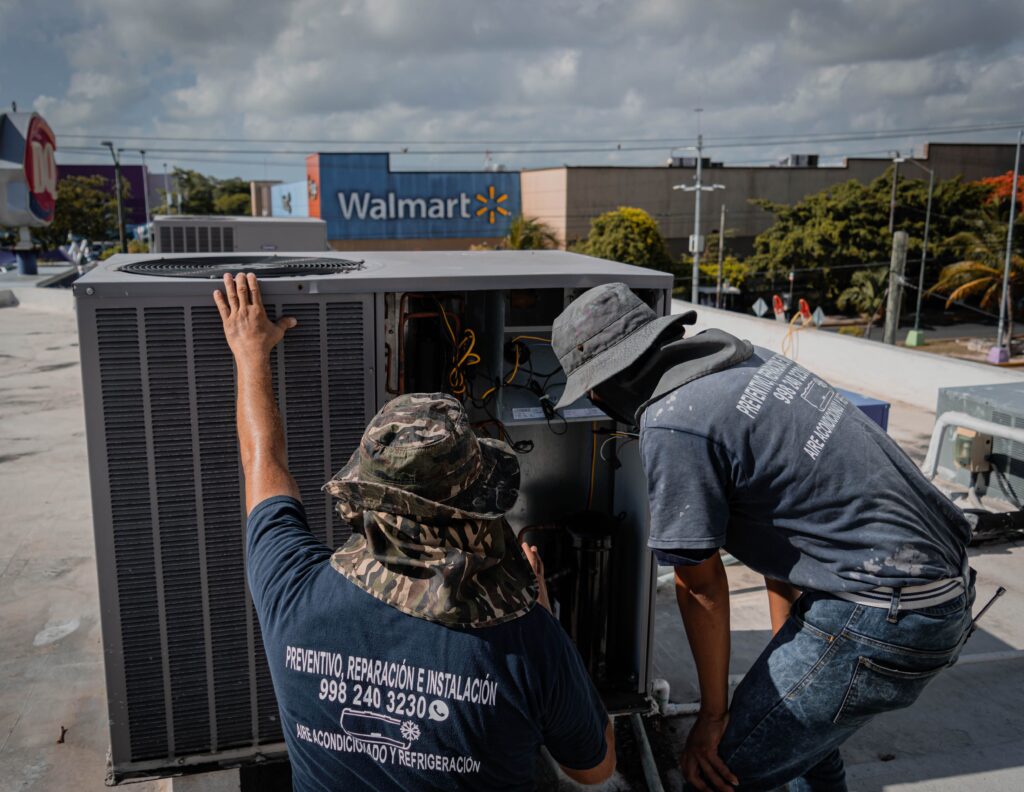
How to Verify a Technician’s Certification
Homeowners rarely think to ask for proof of certification, yet the request is entirely reasonable before any refrigerant work begins. A few practical steps can confirm a technician’s standing:
- Ask to see the physical certification card, which lists the technician’s name and certification type.
- Confirm the certification type matches the equipment being serviced, particularly for Type II systems common in residential cooling.
- Check whether the certifying organization is EPA-approved, since not all training programs carry recognized accreditation.
We’re always glad to show our certification credentials before starting any refrigerant work, and we encourage every customer to ask. It only takes a few minutes, and it gives real assurance that the person touching your system is legally and technically qualified for the job.
Talk to Our Certified Technicians in Mesa, AZ
We’re Frozen Cactus Air Conditioning & Heating, LLC, a family-owned HVAC contractor proudly serving Mesa along with Chandler and Gilbert and the surrounding East Valley. Our team handles AC installation, replacement, repair, and maintenance, along with heating and indoor air quality services, and we’re glad to walk you through the licensing requirements Arizona sets for HVAC contractors alongside the EPA rules covered here.
If you’d like a second opinion on a quote you’ve already received, or you just want to know more about who we are before letting us into your home, we’re happy to talk it through. To speak directly with one of our certified technicians about a cooling system in Mesa or the surrounding East Valley, reach out today.