 Skip to content

Mesa, Arizona sits at the heart of the East Valley, where summer temperatures routinely exceed 110°F and the cooling season stretches from late March through October. For homeowners and property managers in the area, the built environment plays a direct role in how hard residential and commercial HVAC systems must work. One structure that shapes the surrounding urban landscape — and, by extension, the thermal load of nearby buildings — is the Mesa Arts Center, the largest arts complex in Arizona.
What Is the Mesa Arts Center?
The Mesa Arts Center is a publicly funded performing arts and visual arts facility located in downtown Mesa at the intersection of Main Street and Center Street. Opened in 2005, the complex covers approximately 212,000 square feet and includes four theaters, five art studios, and several gallery spaces. It was developed by the City of Mesa as the centerpiece of the city’s downtown revitalization corridor, with community and institutional partners contributing to its programming and civic mission.
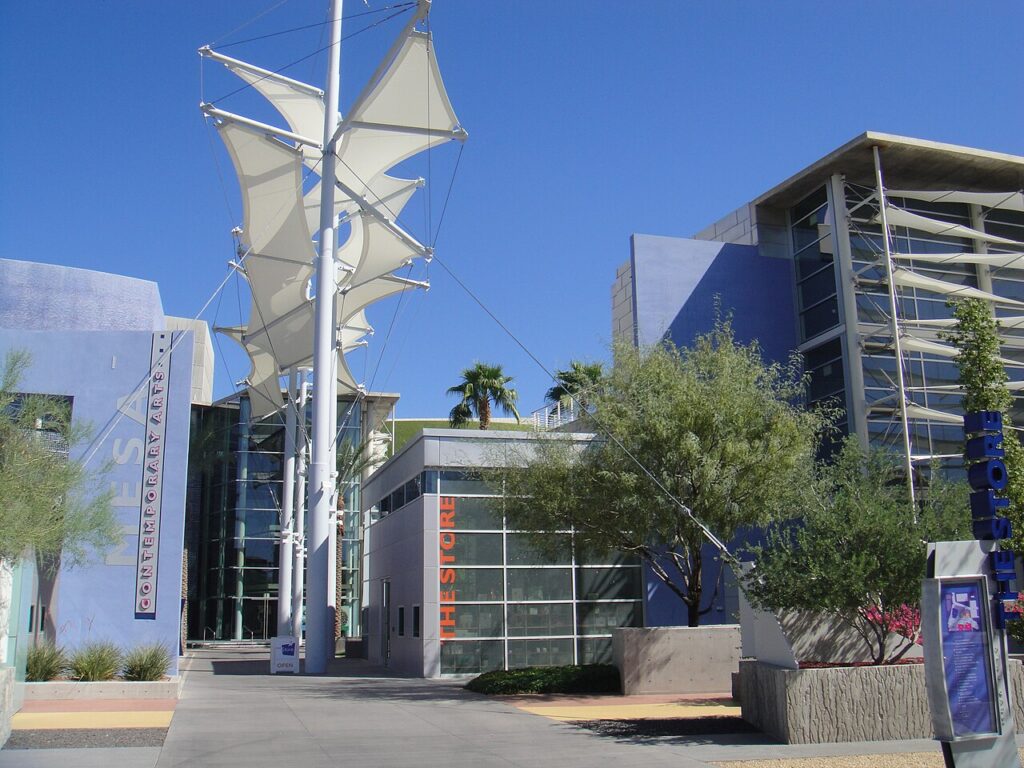
The complex was designed by the architectural firms Herberger Architects and Boora Architects. Its design incorporates desert-inspired geometry, outdoor plazas, shade structures, and water features — elements chosen partly for their passive cooling properties in a hot arid climate. The facility draws visitors year-round and remains one of the most recognizable civic structures in the Phoenix metropolitan area.
Architecture and Passive Design in a Desert Climate
The Mesa Arts Center’s design takes the Sonoran Desert climate seriously. Shade canopies, deep overhangs, and strategic building orientation reduce direct solar exposure across pedestrian pathways and outdoor gathering spaces. These passive strategies — approaches that reduce heat gain without mechanical systems — reflect the same principles that inform energy-efficient building envelopes in residential construction throughout Mesa.
In a climate where the average annual cooling degree days (a measure of how much cooling a building requires, calculated from daily temperature data) far exceed the national average, passive design choices have measurable consequences for HVAC load. Buildings near the Mesa Arts Center’s shaded plazas experience lower ambient radiant temperatures compared to exposed asphalt surfaces elsewhere in the downtown grid. That difference, even when modest, translates to reduced stress on air conditioning equipment during peak summer months.
Downtown Mesa and the Urban Heat Island Effect
Urban heat island effect — a phenomenon where dense urban surfaces absorb and retain more solar radiation than vegetated land, raising ambient temperatures by 2°F to 10°F — is a documented concern in the Phoenix metropolitan area. The Environmental Protection Agency identifies the region as one of the fastest-warming urban metros in the country due to this effect.
The Mesa Arts Center’s landscaping and water features contribute modestly to heat mitigation in the immediate downtown area. For property managers overseeing buildings within the surrounding blocks, this context matters: air conditioning systems in urban cores often operate under higher ambient conditions than systems installed in residential neighborhoods with more tree canopy and green space. Selecting equipment rated for high ambient temperatures — typically units tested up to 125°F outdoor conditions — is a relevant consideration in this part of the Valley.
Downtown Mesa’s Growth and Urban Character
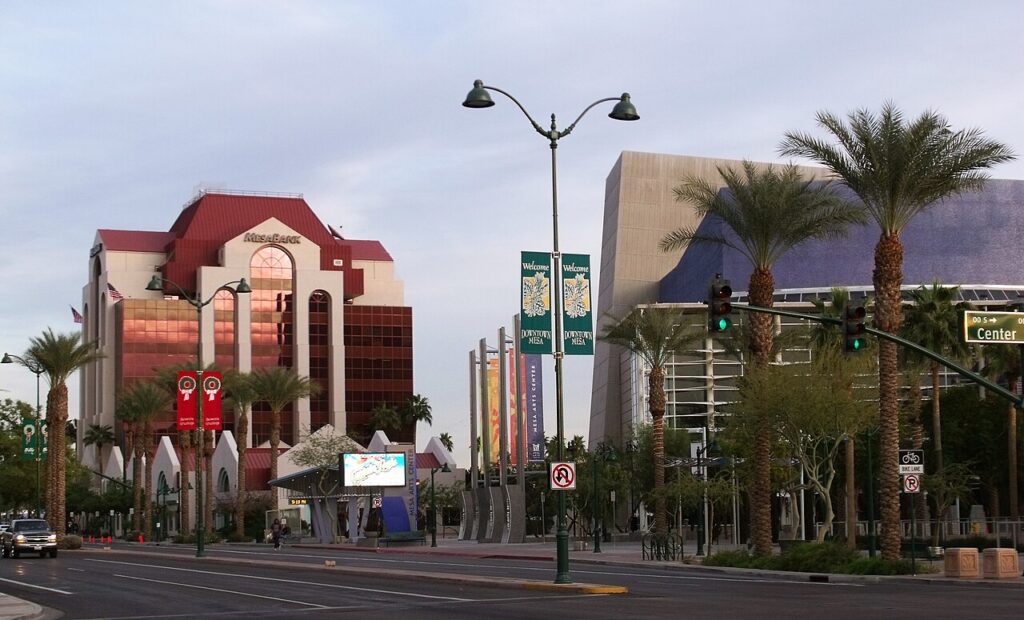
The area surrounding the Mesa Arts Center has undergone significant transformation since the complex opened in 2005. What was once a struggling downtown corridor has developed into one of the East Valley’s most active civic and cultural districts, with new residential developments, independent restaurants, and creative businesses establishing themselves in the blocks surrounding the complex.
This revitalization reflects a pattern seen in cities across the country: sustained investment in cultural infrastructure drives long-term neighborhood change. The Mesa Arts Center’s consistent programming calendar — more than 500 events annually drawing hundreds of thousands of visitors, according to the City of Mesa — has created the kind of reliable foot traffic that supports the commercial ecosystem around it.
Cultural Significance and Property Value Context
The Mesa Arts Center’s cultural programming spans performing arts, visual arts education, and community events that serve residents across the broader Phoenix metropolitan area — not just downtown Mesa. Its five art studios offer classes and workshops open to the public, making it one of the most accessible arts education facilities in the East Valley.
For Mesa residents, the Arts Center represents a long-term civic investment that continues to define the character of downtown and draw new residents, businesses, and visitors to the area — reinforcing the city’s identity as a cultural destination within one of the fastest-growing metros in the country.