 Skip to content

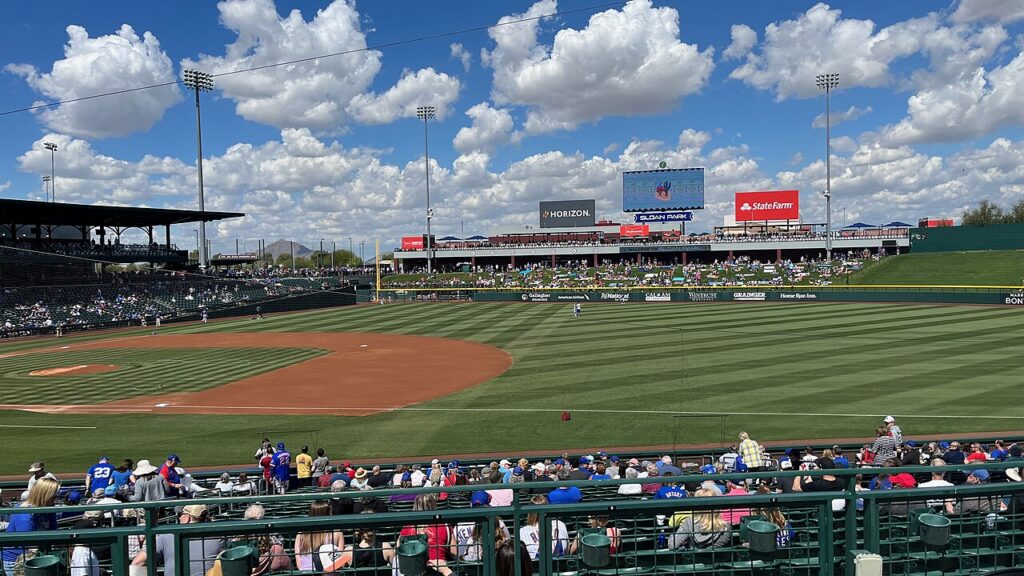
Sloan Park sits in Mesa, Arizona, as one of the most recognizable venues within the Cactus League, the collection of Major League Baseball spring training facilities scattered across the Phoenix metropolitan area. The stadium opened in 2014 and hosts the Chicago Cubs organization each February and March. Beyond its role in professional baseball, Sloan Park represents a case study in how large public assembly buildings function within one of the hottest and driest climates in the continental United States.
Understanding how such facilities manage heat, airflow, and indoor comfort offers useful context for Mesa residents, since the same climate conditions that shape stadium design also shape the AC repair and installation needs of every home and business in the region.
Spring training season overlaps with Mesa’s transitional weather period, when daytime temperatures often swing from comfortably mild mornings into the 85–90°F range by mid-afternoon. This seasonal variability makes Sloan Park a relevant, if unconventional, lens for examining local climate control needs.
Location and Regional Climate Context
Sloan Park occupies a site near Wrigleyville West, a mixed-use development in northwest Mesa, and draws hundreds of thousands of visitors during the six-week spring training window. Maricopa County’s desert climate produces low humidity, intense solar radiation, and wide daily temperature swings that directly influence how open-air and semi-enclosed structures are engineered.
The National Weather Service office that tracks regional climate data for the Phoenix area reports that Mesa averages more than 3,800 hours of sunshine annually, among the highest totals of any major U.S. metropolitan area. That level of solar exposure affects far more than baseball fans sitting in the stands. It also drives the mechanical load on any building envelope in the region, including the concourses, clubhouses, and administrative spaces within Sloan Park itself.
Large structures in this climate rely heavily on shade engineering, reflective roofing materials, and mechanical cooling to keep enclosed spaces functional during daytime events. This is the same underlying physics that determines cooling demand in a typical Mesa household.
.jpg)
Cooling Demands in Large Desert Venues
Enclosed portions of stadiums, such as suites, offices, locker rooms, and retail areas, require conventional heating, ventilation, and air conditioning (HVAC) systems much like any commercial building. These systems typically rely on components familiar to anyone who has researched residential cooling, including condenser coils, which release heat absorbed from indoor air to the outdoors, and refrigerant, the chemical compound that cycles through the system to transfer that heat.
Because Sloan Park operates seasonally, its mechanical systems must respond quickly to intermittent, high-occupancy use rather than the steady demand seen in year-round facilities. Commercial equipment of this scale is generally rated and tested according to standards set by the Air-Conditioning, Heating, and Refrigeration Institute, an organization that maintains a certified equipment directory for HVAC products sold in the United States.
AHRI certification gives building operators a verified benchmark for capacity and efficiency rather than relying on manufacturer claims alone. Efficiency benchmarks matter considerably in a desert climate, where cooling can account for a disproportionate share of total energy use compared to more temperate regions.
Efficiency Standards That Apply Locally
Residential and light commercial cooling equipment sold nationwide, including throughout Mesa, must meet minimum efficiency levels established by the U.S. Department of Energy. These standards are expressed through the Seasonal Energy Efficiency Ratio, or SEER rating, which measures how much cooling output a system produces per unit of electricity consumed over a typical season.
The Department of Energy raised minimum efficiency requirements for the Southwest region specifically because of the extended cooling seasons found in states like Arizona. A few standards commonly referenced in Arizona’s hot-climate zone include the following:
- Minimum SEER2 ratings for split-system air conditioners installed in the Southwest region
- Mandatory efficiency testing procedures established by the Department of Energy
- AHRI-certified performance ratings for commercial-grade equipment
- Building envelope and insulation guidance referenced in the Arizona Energy Code
These regulations were not designed with any single building in mind, but their logic applies equally to a large public venue and an individual residence. Both must account for extended run times, higher compressor cycling, and the added strain that desert heat places on refrigeration components.
Homeowners weighing the cost of repeated repairs against a full system upgrade often review AC replacement considerations for exactly this reason, since equipment sizing and efficiency ratings carry real weight in a desert climate.
Seasonal Timing and Local Relevance
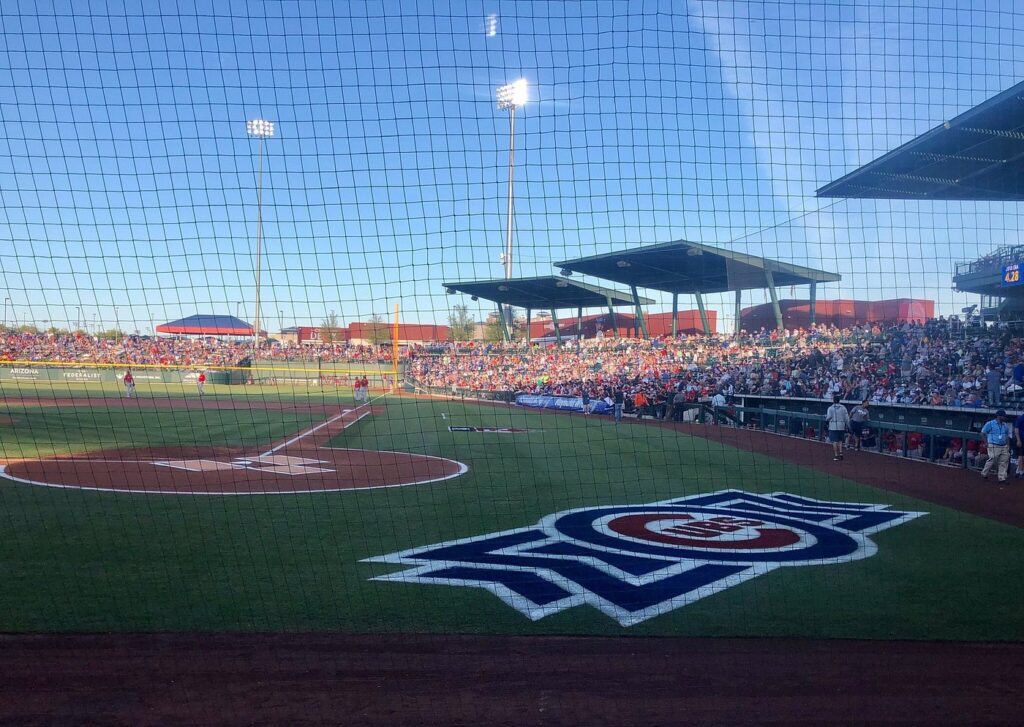
Spring training at Sloan Park runs concurrently with one of the more favorable stretches of Mesa’s annual weather pattern, before summer temperatures regularly exceed 100°F. This timing is not incidental.
Cactus League scheduling has long taken advantage of the region’s mild late-winter conditions, which allow outdoor athletic activity without the extreme heat that defines a Sonoran Desert summer. For residents, this same seasonal window often marks the period when cooling systems transition from occasional to near-constant use.
Facilities professionals who study desert building performance frequently point to shade structures, radiant barrier roofing, and properly sized mechanical equipment as the primary tools for managing heat gain in this climate. Oversized or undersized equipment can lead to inefficient cycling, uneven cooling, and higher utility costs, a concern relevant to any Mesa property regardless of size.
Because misdiagnosed equipment issues can lead to costly repair estimates, some homeowners choose to get a second opinion on repair costs before authorizing major work, particularly heading into the hottest months.
Historical and Cultural Significance
Sloan Park also holds cultural significance for Mesa as part of the city’s decades-long relationship with Cactus League baseball, which has been played in the Phoenix area since 1947. The venue’s design reflects broader trends in stadium architecture that prioritize open-air seating, shaded concourses, and passive cooling strategies suited to arid climates.
These architectural choices mirror the same climate-responsive principles that guide residential construction standards across Maricopa County, standards that local HVAC technicians apply routinely when sizing and installing systems in the East Valley. Taken together, Sloan Park illustrates how a single piece of civic infrastructure can reflect the environmental realities shared by every building in the region.